Islamic Events
KAL?M,?IKMA, & SUFISM -THE 3 ‘TRUNKS’ OF POST-CLASSICAL PHILOSOPHY IN ISLAM
About This Event
What propelled Islamic philosophy forward after the classical period? This talk maps interconnections between theology, philosophy & Sufism
Organised by
Islamic Courses
with the support of
Ebrahim College
and the '
Templeton Foundation and The Global Philosophy of Religion Project 2
' :
KAL?M, ?IKMA, AND SUFISM — THE THREE ‘TRUNKS’ OF POST-CLASSICAL PHILOSOPHY IN ISLAM
With
Professor Frank Griffel
[
Professor for the Study of Abrahamic Religions, Oxford University
]
Dr Daniel Molto
[
Assistant Professor of Philosophy, University of Sussex
]
Professor Anthony Booth
[
Professor of Ethics and Epistemology, University of Sussex
]
Date and time
: Friday 10th July 2026, 6p
m - 7.30
pm
Venue
:
Ebrahim College, 399-401 High Street, Stratford, London E15 4QZ
What propelled Islamic philosophy forward after the classical period? This talk maps the deep interconnections between theology, philosophy, and Sufism by looking at al-Ghazali's epistemology and mysticism.
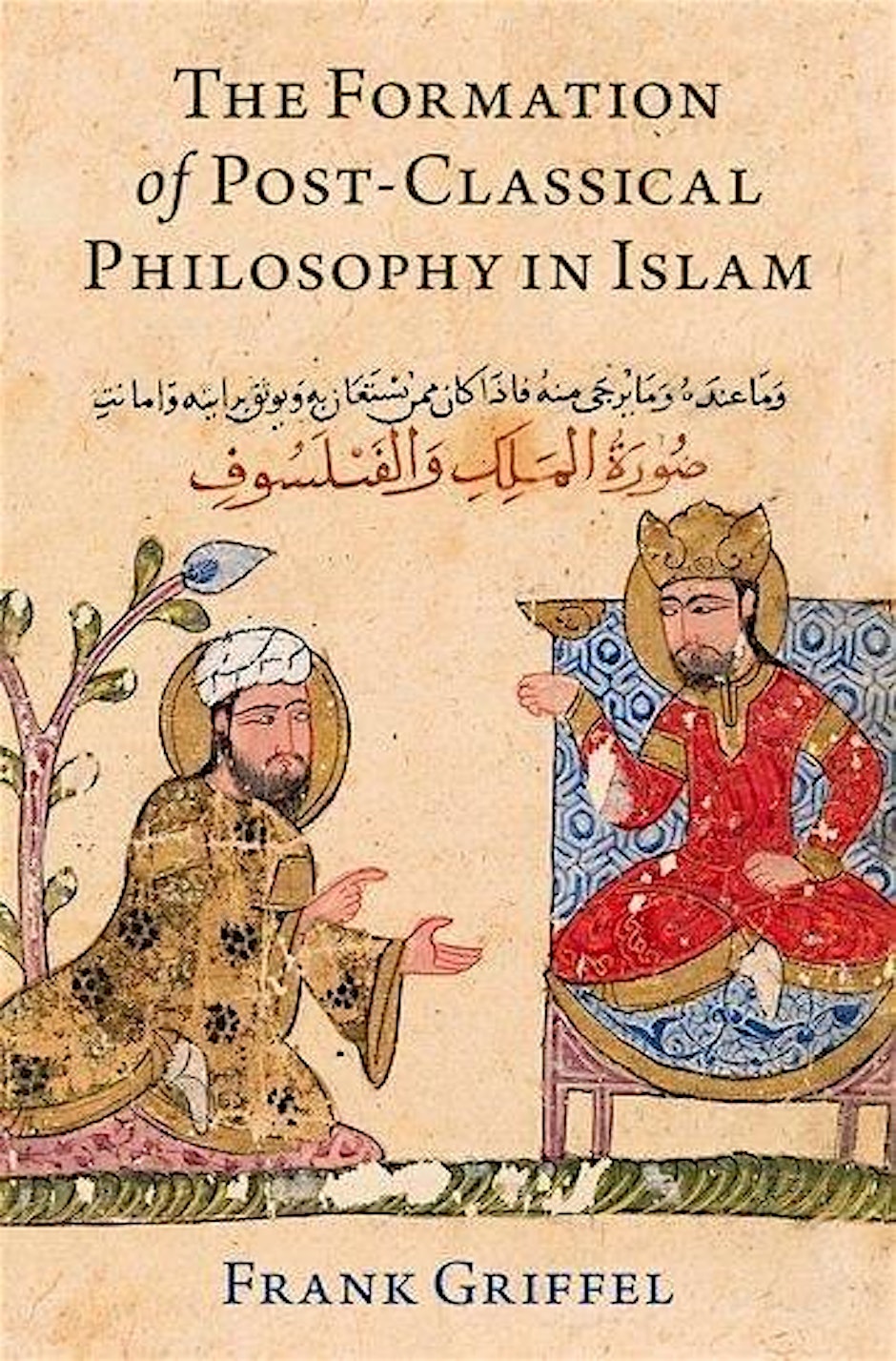
Scholars have come to recognize the importance of classical Islamic philosophy both in its own right and in its preservation of and engagement with Greek philosophical ideas. At the same time, the period immediately following the so-called classical era has been considered a sort of dark age, in which Islamic thought entered a long decline. In this monumental recent work, Professor Frank Griffel seeks to overturn this conventional wisdom, arguing that what he calls the "post-classical" period has been unjustly maligned and neglected by previous generations of scholars.
The Formation of Post-Classical Philosophy in Islam is a comprehensive study of the far-reaching changes that led to a re-shaping of the philosophical discourse in Islam during the twelfth century. Earlier Western scholars thought that Islam's engagement with the tradition of Greek philosophy ended during that century. More recent analyses suggest that Islamic thinkers instead integrated Greek thought into the genre of rationalist Muslim theology (kal?m). Griffel argues that even this new view misses a key point. In addition to the integration of Greek ideas into kal?m, Muslim theologians picked up the discourse of classical philosophy in Islam (falsafa) and began to produce books in the tradition of Plato, Aristotle, and Avicenna—a new and oft-misunderstood genre they called "?ikma"—in which they left aside theological concerns. They wrote in both genres, kal?m and ?ikma, and the same writers argued for opposing teachings on the nature of God, the world's creation, and the afterlife depending on the genre in which they were writing. Griffel shows how careful attention to genre demonstrates both the coherence and ambiguity of this new philosophical approach and offers a detailed, insightful history of philosophy in Iraq, Iran, and Central Asia during the twelfth century. It is essential reading for anyone interested in the history of philosophy or the history of Islam.
This is the first on a series of talks on the theme: KAL?M,?IKMA, & SUFISM -THE 3 ‘TRUNKS’ OF POST-CLASSICAL PHILOSOPHY IN ISLAM.These talks will be accompanied by an exhibition of reproductions of Islamic manuscripts representing the spread of Sufi thought across the Sahara desert."
About the speakers:
*Professor Frank Griffel
is Professor of the Study of Abrahamic Religions at Oxford University and Fellow of Lady Margaret Hall. He has published widely in the fields of Islamic philosophy and theology as well as Muslim intellectual history. After working on apostasy in Islam and on the leading theologian and philosopher al-Ghaz?l? (d. 1111), Griffel turned his interest toward the history of philosophy in Islam and Judaism, particularly during Islam’s post-classical period after the 11th century. He publishes in English and in German and his books have been translated into Turkish and Arabic. Griffel is also the Louis M. Rabinowitz Professor Emeritus of Religious Studies at Yale University. His research interests include: Conflicts between reason-based knowledge and faith-based knowledge in pre-modern Islam, Judaism and Christianity; conflicts between philosophy and religious authority, religious tolerance in the pre-modern period. Some of his selected publications include: The Formation of Post-Classical Philosophy in Islam. New York: Oxford University Press, 2021; Al-Ghaz?l?’s Philosophical Theology. New York: Oxford University Press, 2009. Islam and Rationality: The Impact of al-Ghaz?l?. Papers Collected on His 900th Anniversary. Volume 2 (out of 2). Edited Volume. Leiden: Brill, 2016.
*Professor Anthony Robert Booth
is Professor of Ethics & Epistemology at Sussex University. Completed his Ph.D at University of Durham and has worked there, and later at Queen's University Belfast, Utrecht University (NL) and the UNAM in Mexico City. He has worked on projects relating to applied epistemology and ethics, the Trusting Banks project and a collaboration project between Groningen and Cambridge Universities. His research interests include; The Ethics of Belief; Epistemology; Philosophy of Mind; Ethics/Political Philosophy; Applied Philosophy; Islamic Philosophy in particular in de-colonising philosophy, and attempt a non-Orientalist discourse for Islamic Philosophy by treating it as a direct contributor to modern debates (and not just an historical artefact). He is also founding member of the Southern Normativity Group (SoNG).
*Dr Daniel Molto
[Assistant Professor of Philosophy, University of Sussex] - Dr. Molto completed his PhD at York in 2015. Having taught at University of York, Leeds Trinity University, and Birkbeck College, he joined the faculty at the University of Sussex in 2018. His research and teaching expertise lie primarily in metaphysics, epistemology, and the philosophy of science, logic, and mathematics. With a particular interest in the epistemology of dialetheism (ie true contradictions), and the semantics of copredication, he publishes on Philosophy of Religion (and Philosophical Theology), Philosophy of Language, Philosophical Logic, and Metaphysics.
--------------------------------------------------------------------------------------------
ALL WELCOME - FREE ENTRANCE! PRE-REGISTRATION ONLY!
DEADLINE FOR BOOKINGs APPLY after which registrations will close!
- -------------------------------------------------------------------------------------------
Date & Time
Starts
Fri 10 Jul 2026, 6:00 PM
Ends
Fri 10 Jul 2026, 8:00 PM

