Charity Events
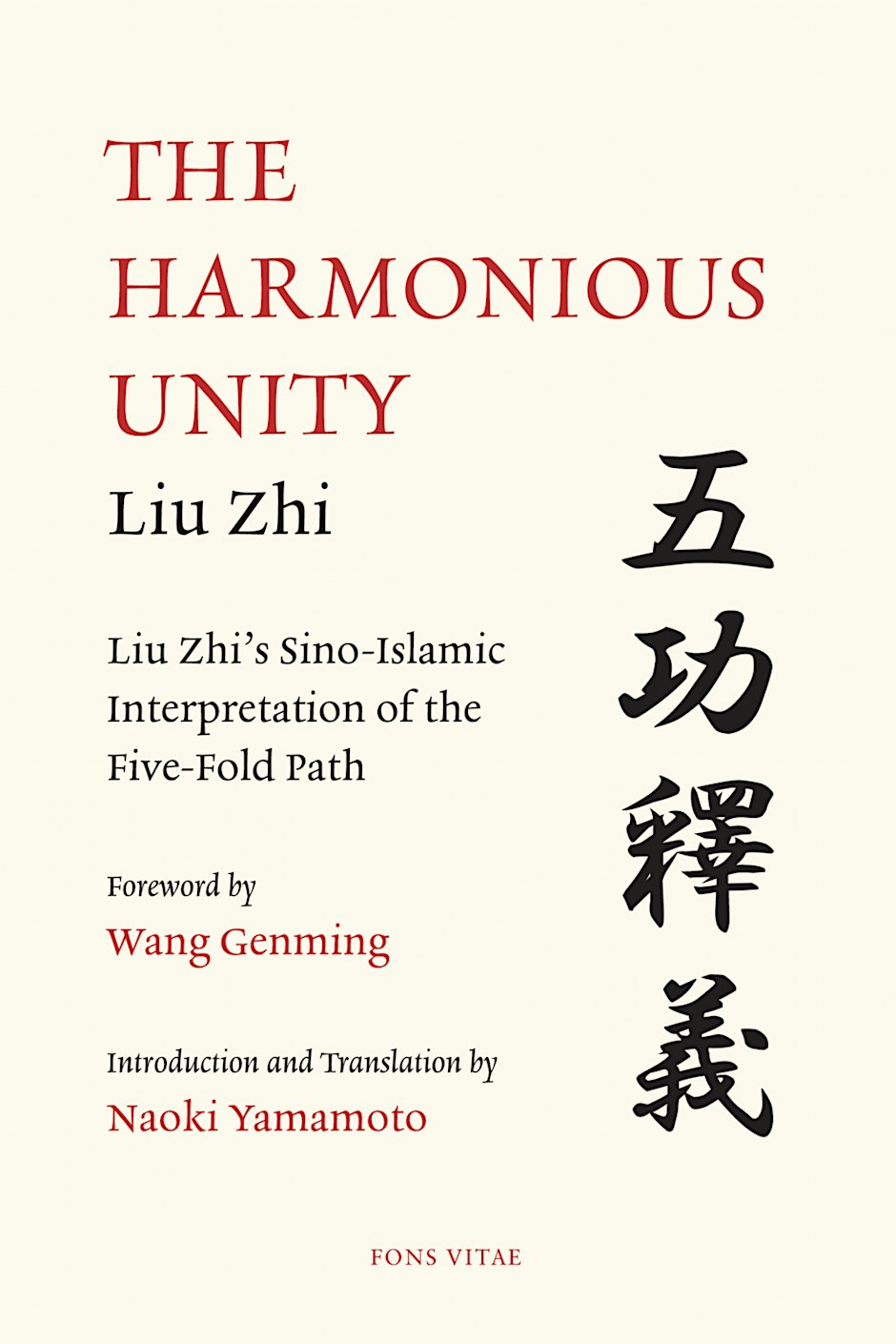
BOOK LAUNCH : LIU ZHI’S SINO-ISLAMIC INTERPRETATION OF THE FIVE-FOLD PATH
About This Event
Organised by
Islamic Courses
with the
Camden Muslim
Network
[camdenmuslimnetwork.org] presents:
BOOK LAUNCH DISCUSSION: THE HARMONIOUS UNITY: LIU ZHI’S SINO-ISLAMIC INTERPRETATION OF THE FIVE-FOLD PATH
with
Dr. Qayyim Naoki Yamamoto
[
Islamic University of Istanbul
].
Host and chair:
Muhammad Chowdhury
[
Camden Muslim Network
]
Date and time
: Thursday 19th November 2026, 7p
m - 9
pm
Venue:
Camden Muslim Network, 11a Pratt Street, London NW1 0AE
Introduction and Translation by Dr Naoki Yamamoto; Foreword by Professor Wang Genming;
This is an English translation of Liu Zhi’s The Exposition of the Five Pillars of Islam, which remains the most influential Chinese-language Islamic work, regarded by Chinese Muslims (Islam arrived in China as early as 618 CE) as a fundamental textbook for learning and comprehending the divinely ordained duties of Islam. Liu Zhi (1660-1739), was a prominent Chinese scholar of the Qing dynasty and a leading figure in the Han Kitab tradition.
“The Exposition of the Five Pillars of Islam” (Wugong Shiyi) by Liu Zhi is a profound treatise on the meaning of the Five Pillars of Islam (Shahada, Salah, Sawm, Zakat, and Hajj), framed within a metaphysical structure that draws on the language and lens of Chinese civilization and philosophy. The work provides both a theological and spiritual explanation of the Five Pillars as well as a moral framework that connects them to broader philosophical ideas about the nature of existence, ethics, and personal cultivation.
Liu Zhi’s Exegesis uses the structure of the Five Pillars as a lens through which to view both human nature and divine principles, emphasizing the unity of divine law (Sharia) with the natural laws governing the cosmos. He likens the Islamic Five Pillars to the classical Chinese cosmological system of the Five Elements (Wood, Fire, Earth, Metal, and Water), demonstrating how human virtues are cultivated through these practices. This creative approach is unparalleled and adds a new dimension to the global discourse on religious philosophy. Liu Zhi was born into a scholarly family in Nanjing, Liu Zhi studied extensively in Confucian, Buddhist, Taoist, and Islamic traditions. He believed in the unity of Eastern and Western sages, seeing parallels between Confucius, Mencius, and the Prophet Muhammad. His most influential work, Tianfang Xingli (The Metaphysics of Islam), became a cornerstone in explaining Islamic philosophy through the lens of Chinese thought. Liu Zhi’s works not only influenced generations of Chinese Muslims but also helped bridge the gap between Islamic and Confucian traditions. His tomb remains a pilgrimage site for Chinese Muslims.
Besides its innate metaphysical and philosophical value, the text is invaluable for understanding how the masters of Chinese Islam straddled religious and civilizational frontiers and created harmony between two different intellectual worlds. Liu Zhi’s approach, however, is distinguished from that of other Muslim scholars in that he addressed the basic articles of Islamic thought with Neo-Confucian terminology and categories. The lens of Chinese civilization includes concepts derived from Taoism, Confucianism & Buddhism.
Professor Dr. Wang Genming is a Hui Muslim scholar and Professor at Xi’an International Studies University whose research focuses on Islamic studies and the intellectual history of Islam in China, particularly the Sino-Islamic intellectual tradition, explains in the Foreword that: “Although the Five Pillars are the foundational rites of Muslim life, the author approaches them not merely as ritual obligations, but as a profound gateway into the doctrines and spiritual philosophy of Islam. Through multi-faceted analyses of their origin, function, requirements, and religious significance, Liu Zhi offers a deep and nuanced exposition of Islamic teachings. The result is a text of exceptional conciseness and philosophical depth, where each line offers clarity at a glance and insight upon reflection.” Many editions have been produced over the centuries, including a wood block edition in 1768. To have such a work giving insights into the way Islam was presented and understood in China is extremely valuable. It opens up a profound, refreshing and exciting approach to thinking about the 5 pillars of Islam whose deeper meanings some Muslims might take for granted.
Copies of the book will be available for sale and signing.
About :
Dr. Qayyim Naoki Yamamoto
[
Islamic University of Istanbul]
. He completed his PhD at the Graduate School of Asia and Africa Studies, Kyoto University in 2018. Qayyim Naoki Yamamoto specializes in Ottoman Tasawwuf and traditional Japanese culture. His publications include a Japanese translation of Sulami’s Kitāb al-Futuwwa and Introduction to Tasawwuf: The Way of Training in Islamic Mysticism (Tokyo: Shueisha, 2023). He has an active online presence, and his other interests include Japanese Islamicate art and calligraphy, swordsmanship, manga and the tea ceremony. He was assistant professor at Graduate school of Turkic Studies, Marmara University til recently joining the new Islamic University of Istanbul focussing on Islamicate in the Far East, writing and researching on the challenges, opportunities on the East Asian Islamic tradition.
--------------------------------------------------------------------------------------------
ALL WELCOME - FREE ENTRANCE! PRE-REGISTRATION ONLY!
DEADLINE FOR BOOKINGs APPLY after which registrations will close!
- -------------------------------------------------------------------------------------------
Date & Time
Starts
Thu 19 Nov 2026, 7:00 PM
Ends
Thu 19 Nov 2026, 9:00 PM
Event Organiser
More Charity Events Events